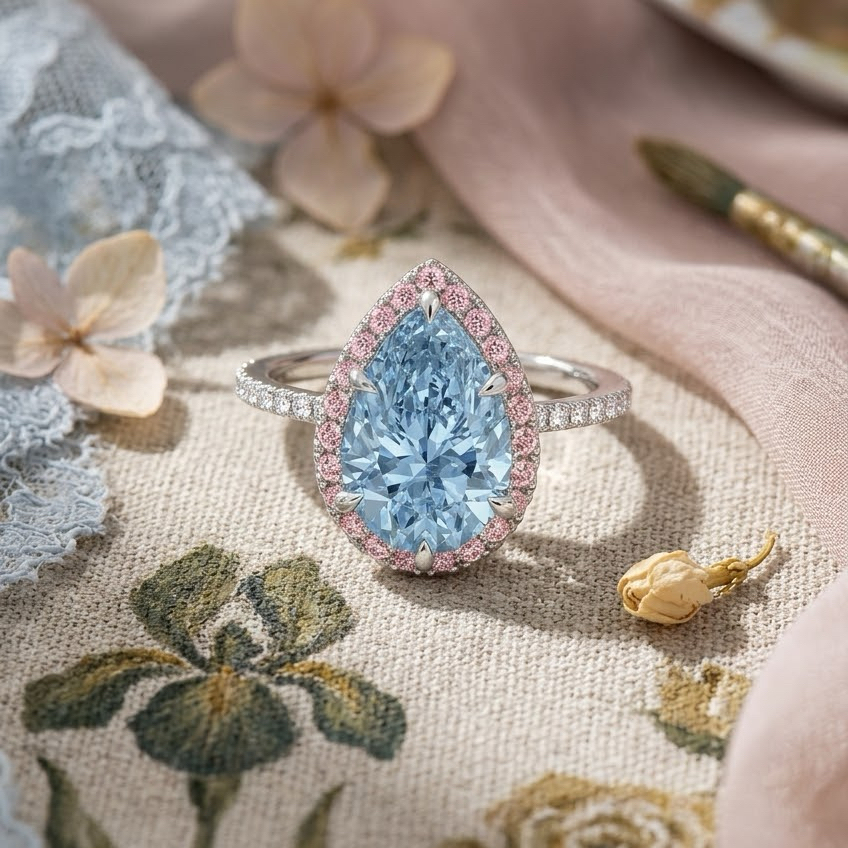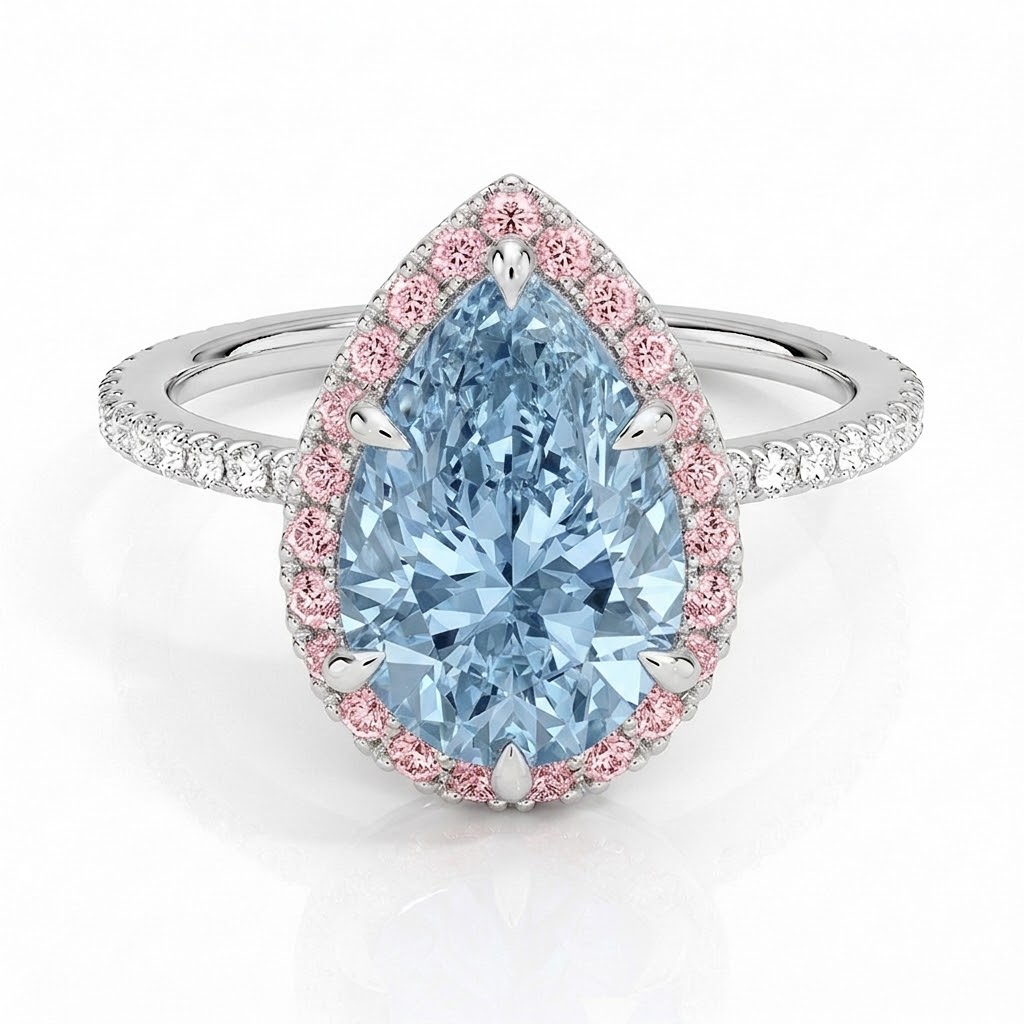
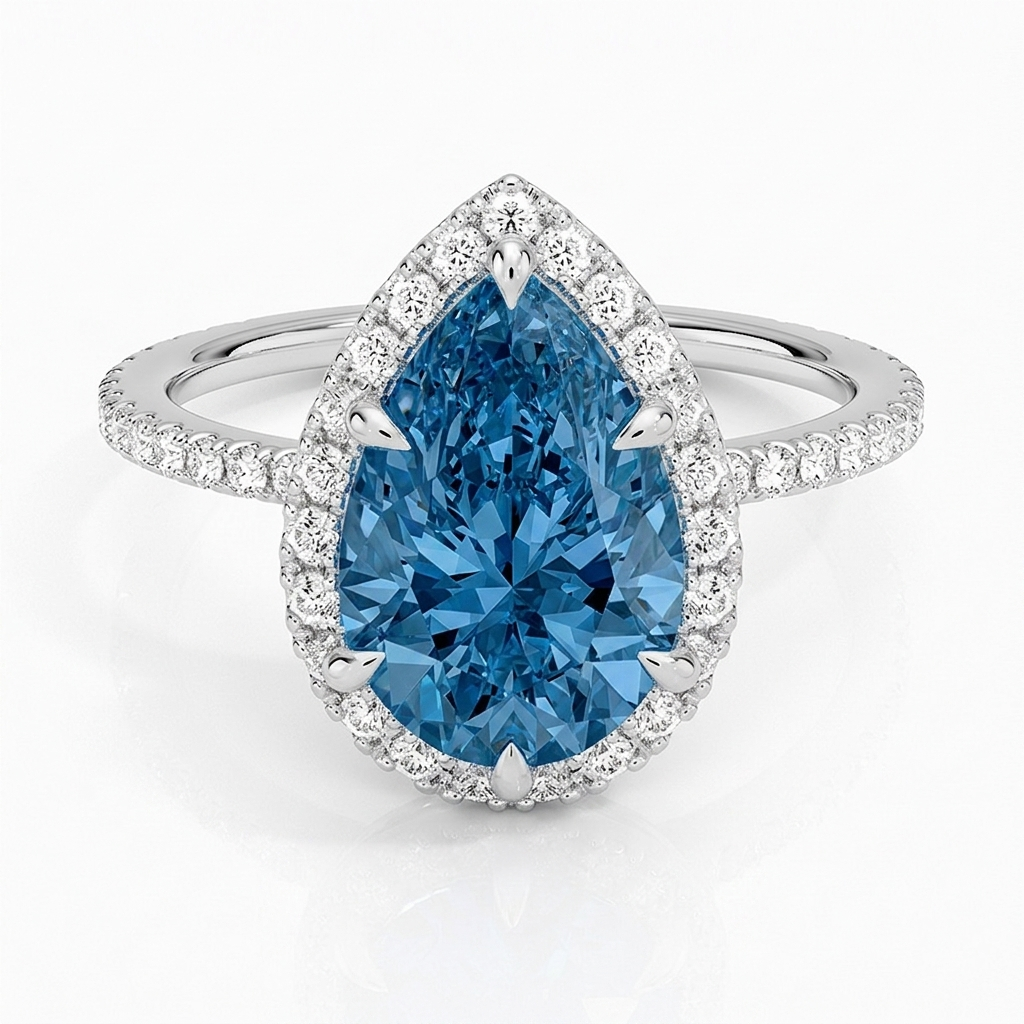
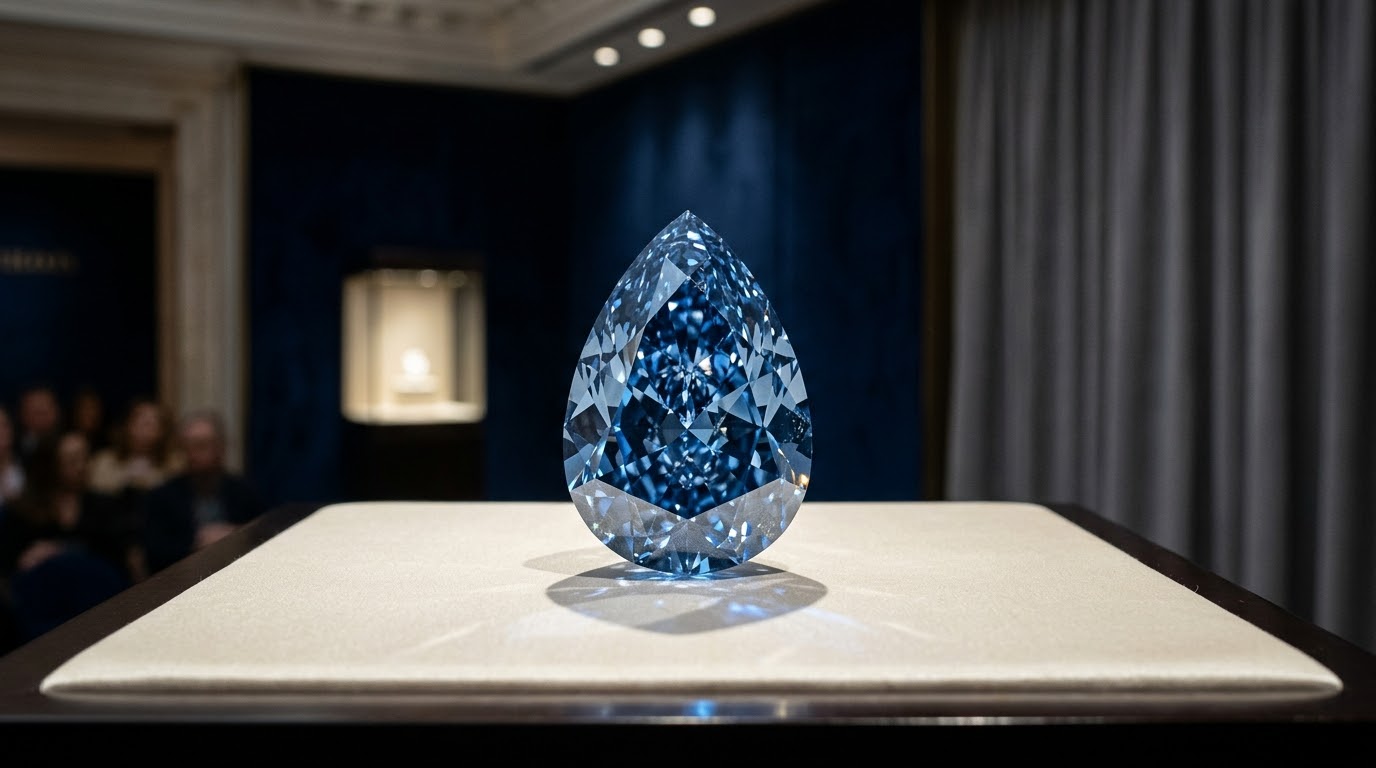
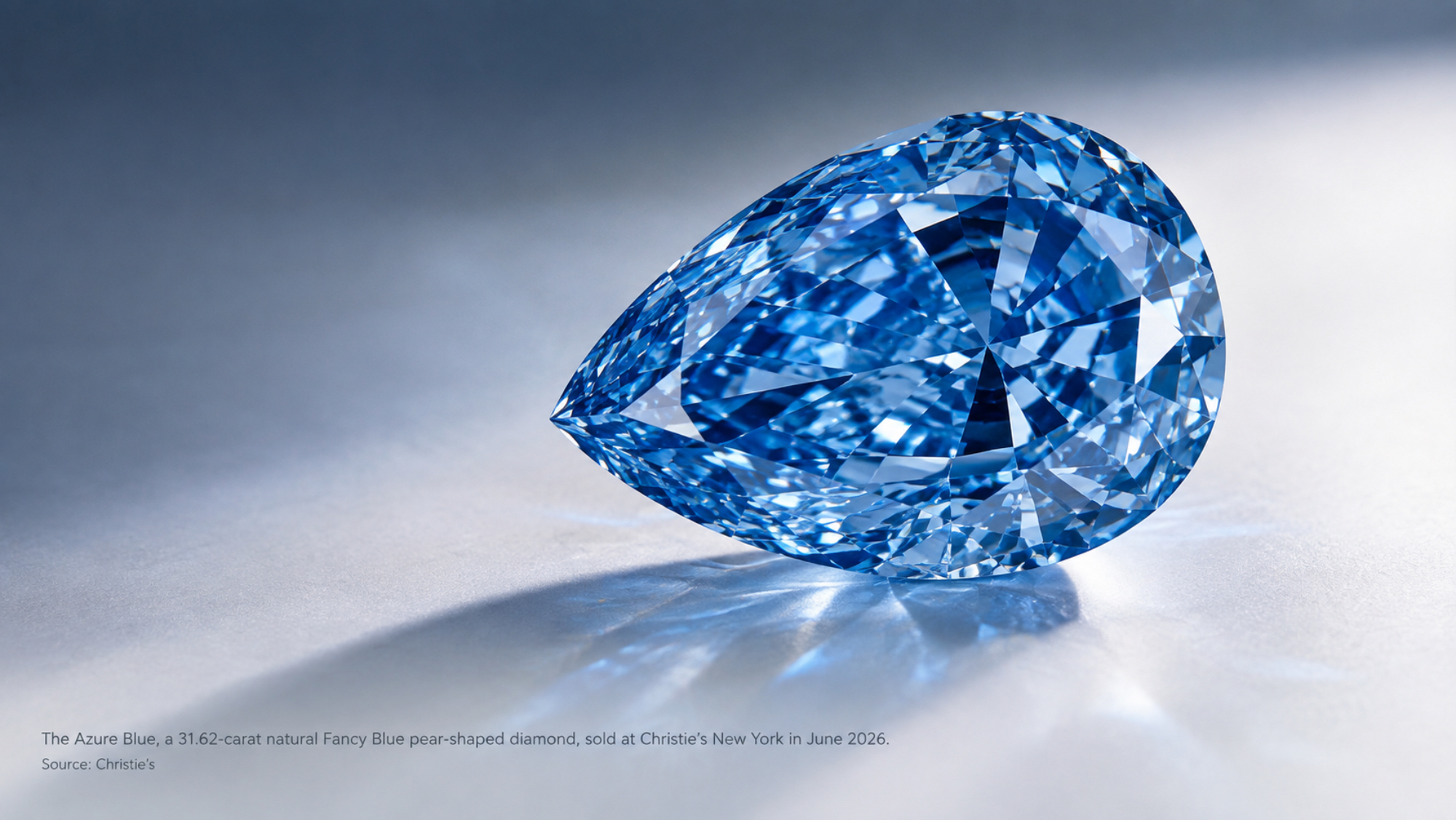
A blue diamond has always carried a particular kind of fascination. In June 2026, Christie’s New York offered The Azure Blue, a 31.62-carat natural Fancy Blue pear-shaped diamond. It sold for $8.371 million, while a separate 5.04-carat Fancy Vivid Blue marquise diamond sold for $8.127 million at the same auction.
The story is a reminder of just how extraordinary natural blue diamonds can be. But it also raises another question for today’s jewelry buyer: if you love the color blue, does your diamond need to be natural?
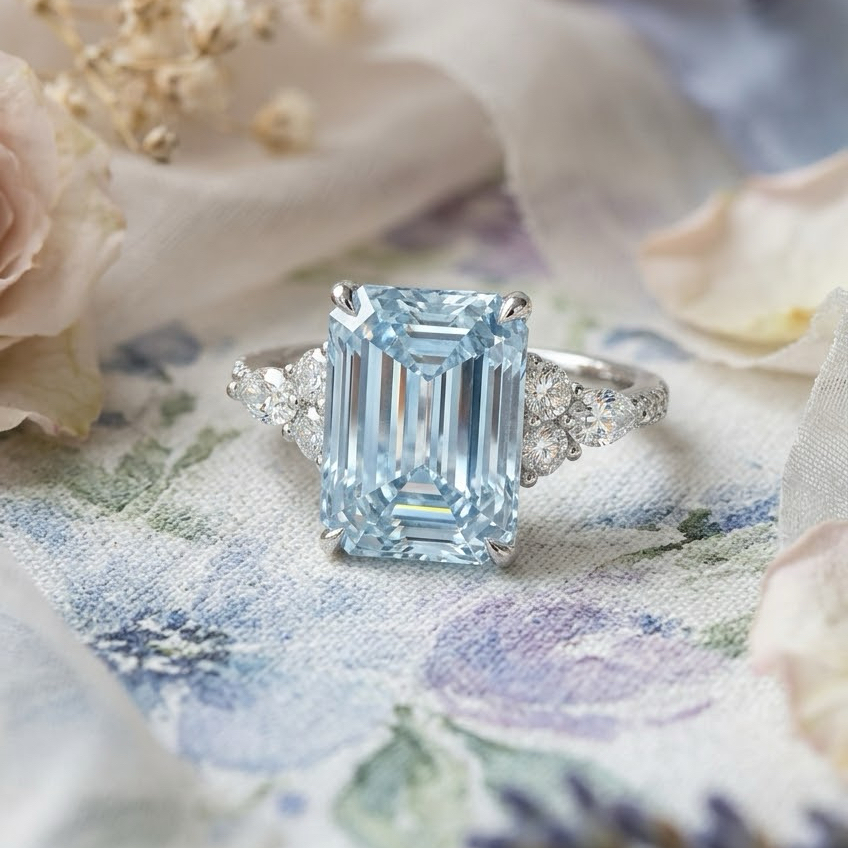
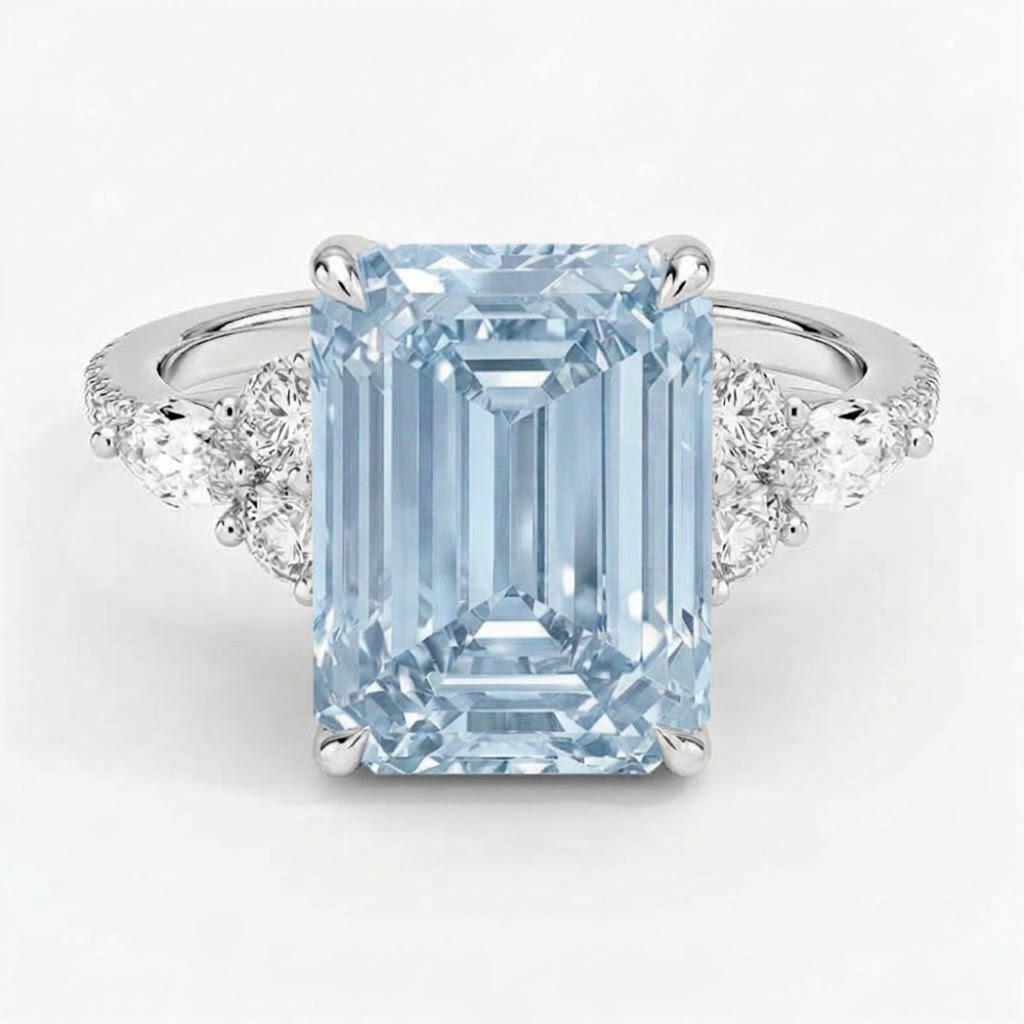
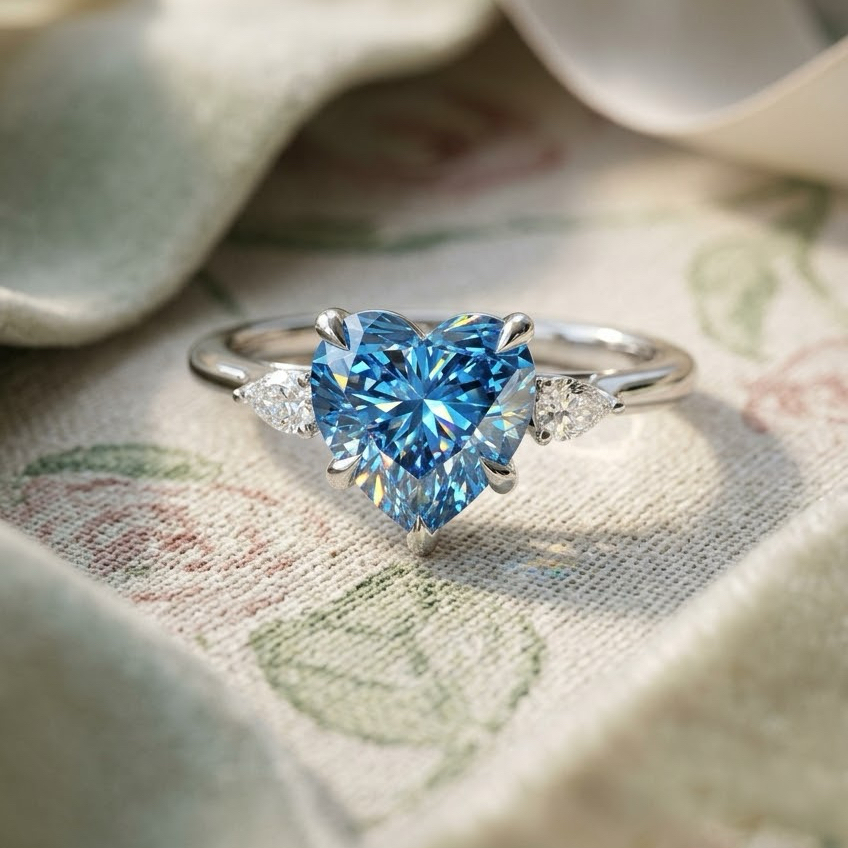
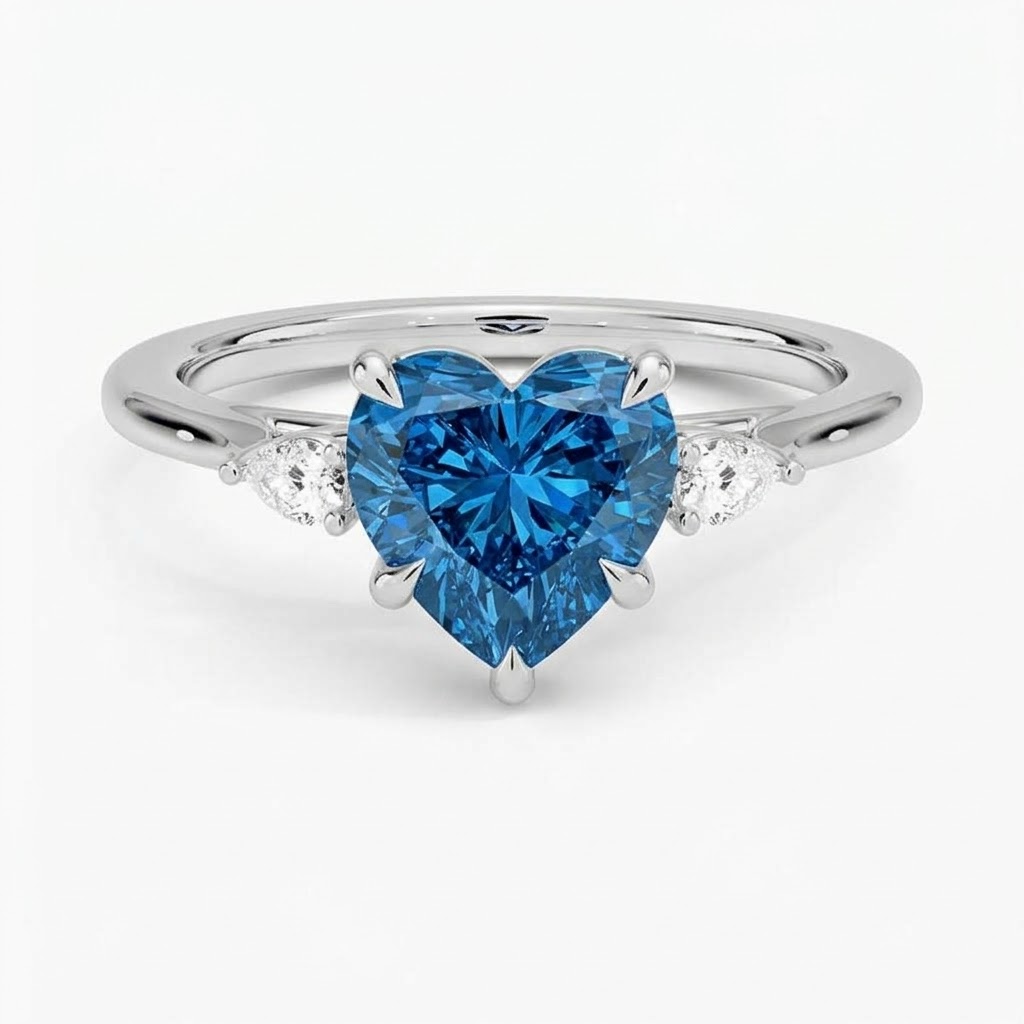
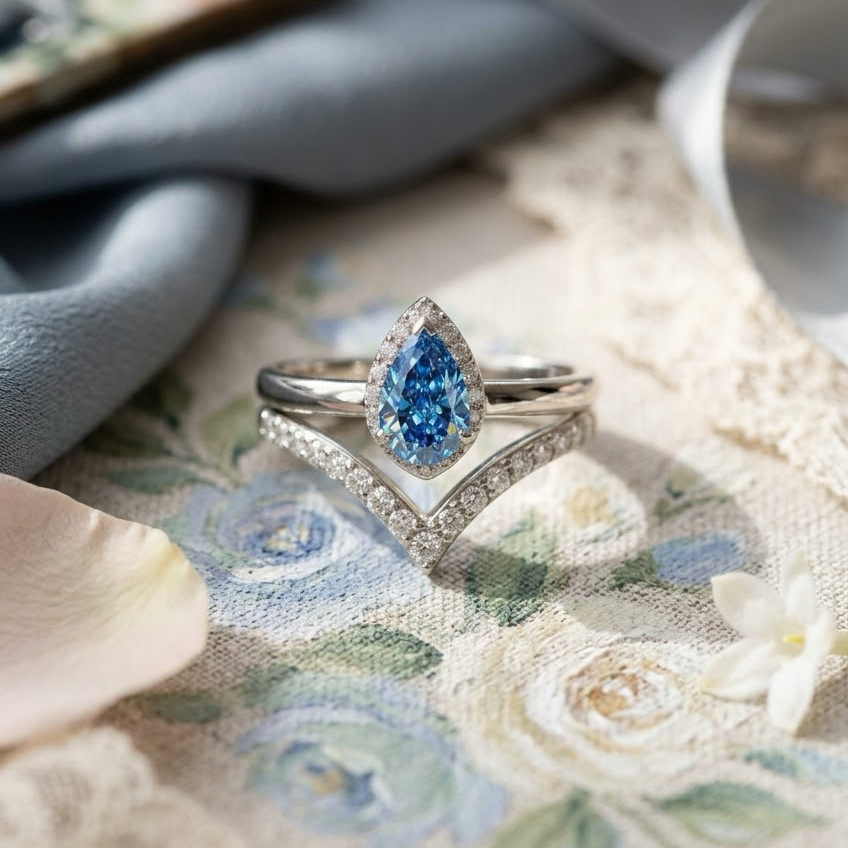
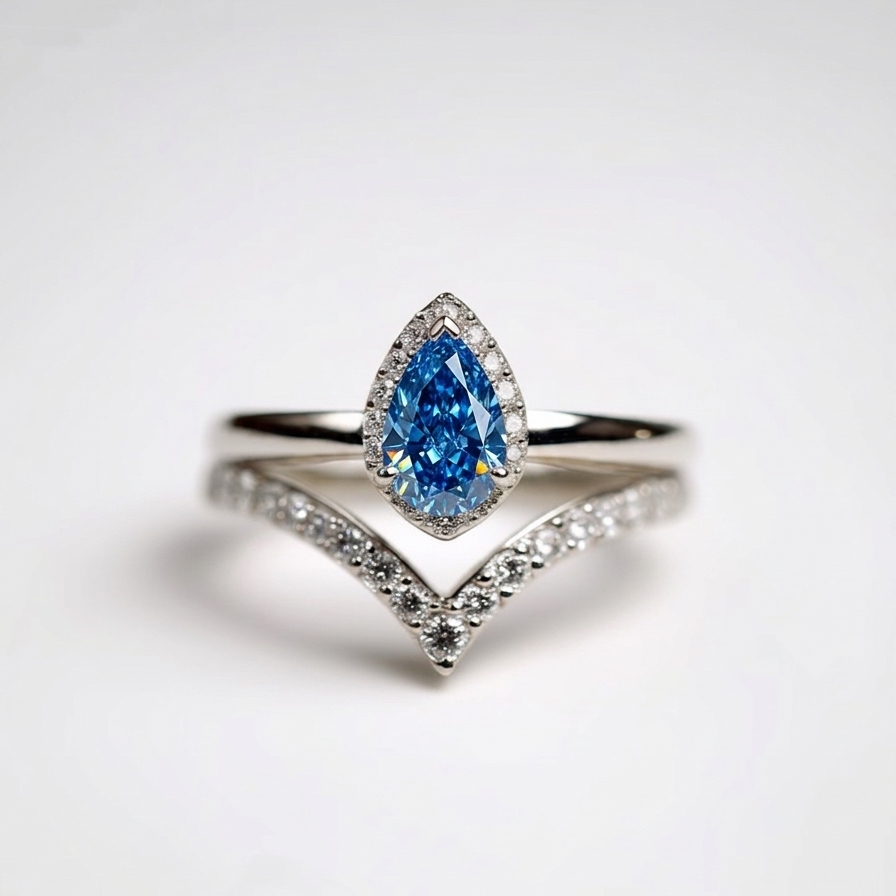
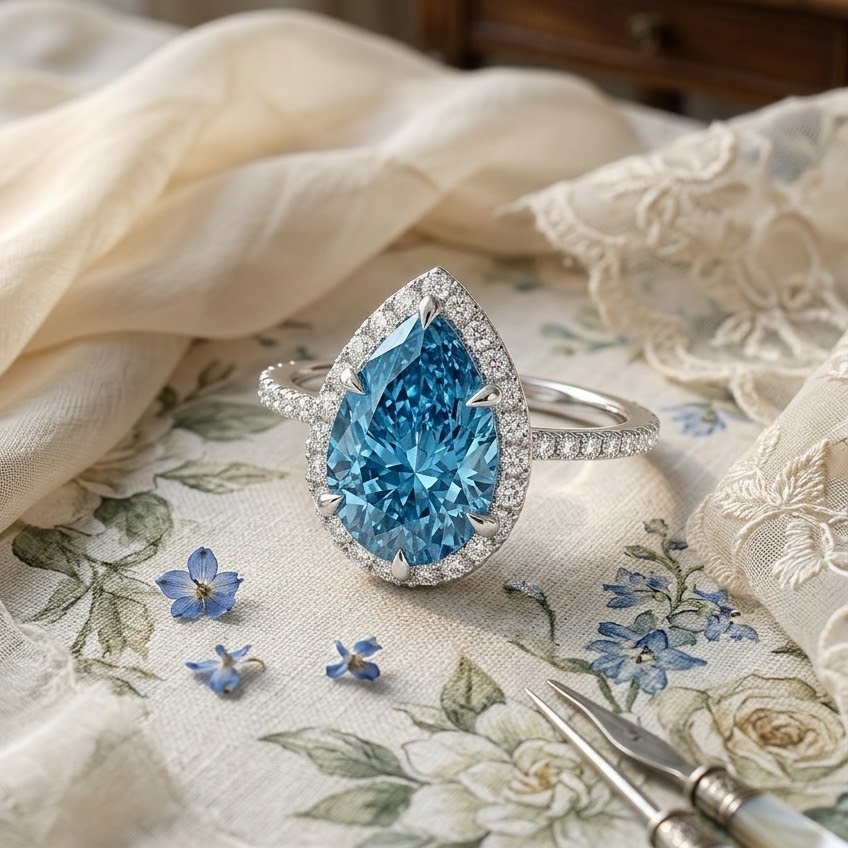
For many women, a blue lab grown diamond offers another way to experience this captivating color in fine jewelry—one that is considerably more accessible while remaining a real diamond with the physical and optical properties of diamond.
In this guide, we’ll explore why blue diamonds are so fascinating, what makes lab-grown blue diamonds different, what to consider before buying one, and how to choose a blue diamond that feels beautiful not only on paper, but to your own eyes.
Why Are Blue Diamonds So Special?
Blue diamonds occupy a particularly fascinating place in the world of colored diamonds.
Natural blue diamonds owe their color primarily to trace amounts of boron incorporated into the diamond’s structure. Exceptional natural blue diamonds are extraordinarily rare, which helps explain their presence in major auctions and historic collections.
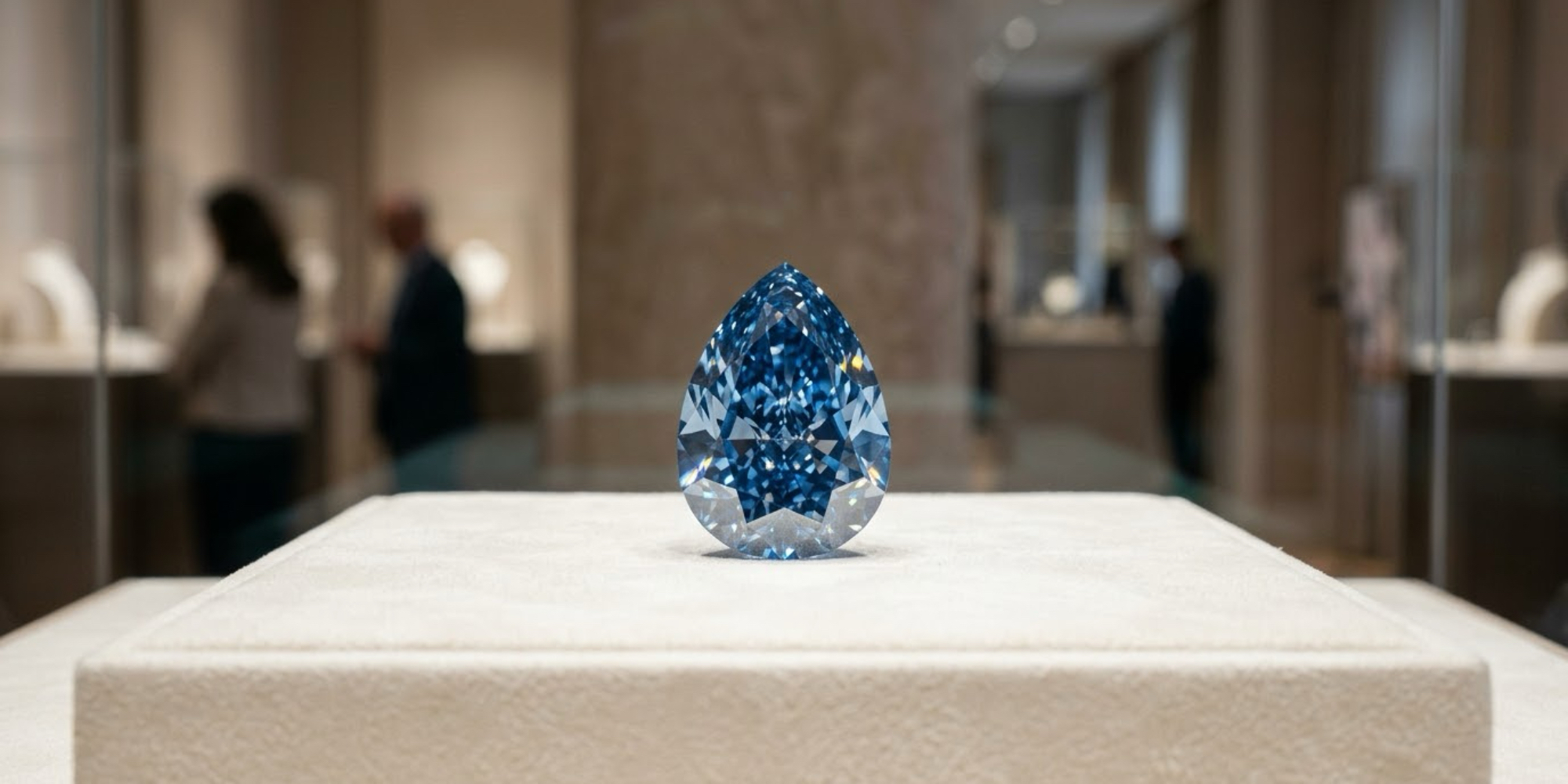
Christie’s described The Azure Blue as the largest Fancy Blue diamond ever to appear at auction. The 31.62-carat pear-shaped diamond was graded by GIA as Fancy Blue, natural color, VVS1 clarity and Type IIb.
Fancy Intense vs Fancy Vivid Diamond: What’s the Difference?
But you don’t need an eight-figure auction stone to appreciate blue. For a woman choosing a piece of fine jewelry for herself, the appeal can be much more personal.
Blue can feel calm and powerful at the same time. It can suggest depth, individuality, confidence and a quiet sense of strength.
What Is a Blue Lab Grown Diamond?
A lab-grown diamond is a diamond created through a technological process rather than formed naturally beneath the earth.
Lab-grown diamonds have essentially the same chemical composition and many of the same physical and optical properties as natural diamonds. Like natural diamonds, they can be beautifully cut—or poorly cut. Their appearance still depends on the individual stone and the skill involved in producing and cutting it.
A blue lab grown diamond is a laboratory-grown diamond that displays blue coloration. The way that color is created can vary.
GIA notes that blue HPHT-grown diamonds can be produced through boron incorporation, while color in some laboratory-grown diamonds can also result from post-growth treatments such as irradiation and annealing.
This is why certification and disclosure matter when purchasing fancy-color lab-grown diamonds.
Discover More about Blue Diamond
What Are the Downsides of Lab-Grown Fancy Diamonds?
Lab-grown fancy-color diamonds offer an exciting opportunity, but they are not without considerations.
The first is market positioning.
Natural blue diamonds can command extraordinary prices because of their geological rarity. The recent Christie’s results illustrate the enormous premium that exceptional natural blue diamonds can command.
Lab-grown diamonds are produced through technology, so they generally do not carry the same scarcity story or market positioning as exceptionally rare natural blue diamonds.
If your priority is geological rarity or collecting an exceptionally scarce natural gemstone, a natural blue diamond belongs to a different category.
If your priority is color, beauty, craftsmanship and wearing a meaningful piece of fine jewelry, a lab-grown blue diamond can offer a very different proposition.
There is also a second consideration: color itself.
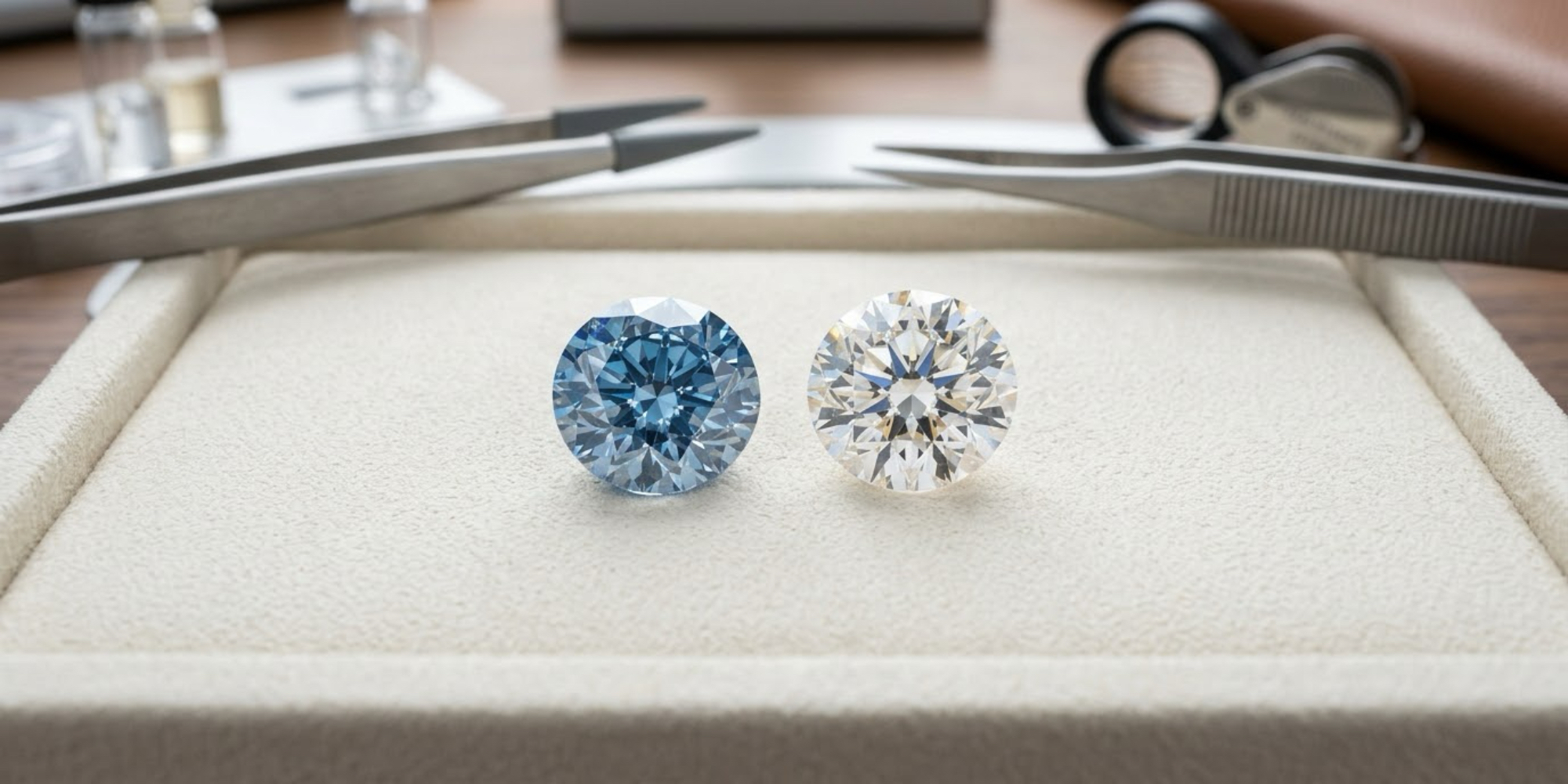
Lab-grown blue diamonds can sometimes have color characteristics that differ from natural blue diamonds. GIA notes that laboratory-grown pink and blue diamonds can sometimes show slightly different coloring from their natural counterparts, with lab-grown examples often being more saturated and having less secondary color.
That doesn’t automatically make one better. It simply means that you should look carefully at the actual stone.
Lab-Grown Colored Diamonds vs Natural Colored Diamonds
Don’t Choose a Blue Diamond From a Color Name Alone
“Blue” is not enough information.
You might encounter terms such as Fancy Blue, Fancy Intense Blue or Fancy Vivid Blue, but the name alone doesn’t tell you whether the particular diamond will have the hue and visual character you personally love.
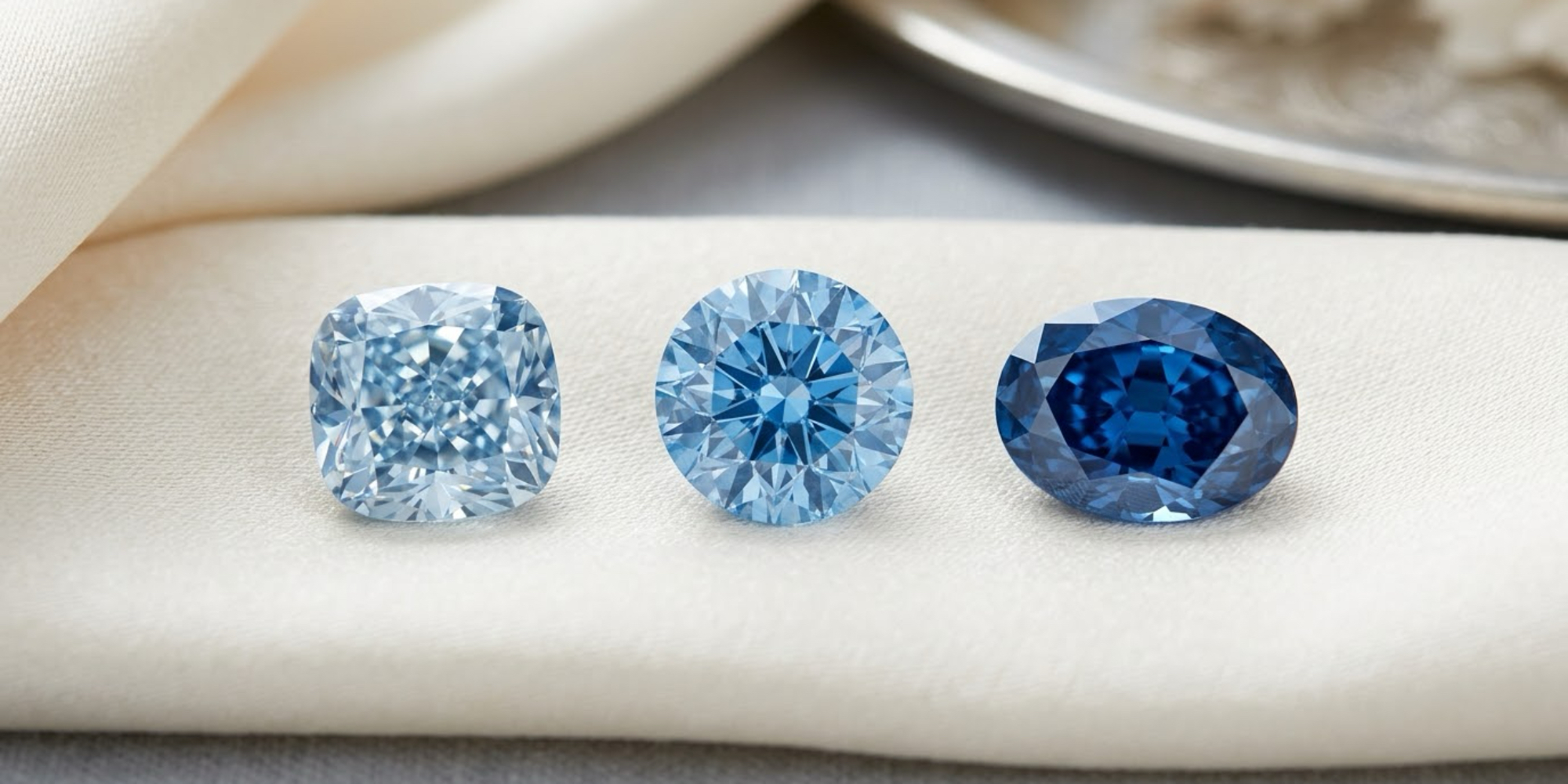
Two blue diamonds can look surprisingly different. One may appear crisp and pure. Another may have a grayish or secondary hue. One may feel intensely saturated. Another may have a softer, more delicate blue.
This is where professional selection becomes important. A certificate gives you the foundation. Your eyes tell you whether you love the actual diamond.
Fancy Color Diamond Grading Explained
Why the Actual Diamond Matters
Fancy-color diamonds are particularly personal because color is part of their identity. When shopping online, don’t rely solely on a stock photograph.
Look at the actual stone. Ask to see it under neutral lighting. Watch a video if possible. Observe the diamond as it moves.
Does the color remain attractive from different angles? Does the stone appear lively rather than dull? Does the blue feel balanced throughout the diamond? Is there noticeable color zoning?
GIA research has documented color zoning in some HPHT-grown colored diamonds, reflecting differences in how color-producing elements are incorporated during growth. This is precisely why individual inspection matters.
How to Shop Lab-Grown Diamonds Online
Certification Is the Foundation—Selection Is What Comes Next
At Her Crown, independent certification is the foundation of our diamond selection process. But we don’t believe a certificate should be the end of the conversation.
We carefully select individual diamonds based on their actual appearance, proportions, symmetry, clarity, color and visual performance.
This is particularly important for fancy-color diamonds. A beautiful blue diamond should not simply satisfy a specification. It should have a color that feels harmonious, an attractive face-up presence and the kind of visual character that makes you want to keep looking at it.
For our bespoke service, we can present the selected diamond to the customer through video together with its certification information before crafting begins. That gives you the opportunity to see the actual diamond that will become your ring.
Why the Same Lab-Grown Diamond Can Have a Different Price
Our New Blue Lab-Grown Diamond Halo Ring
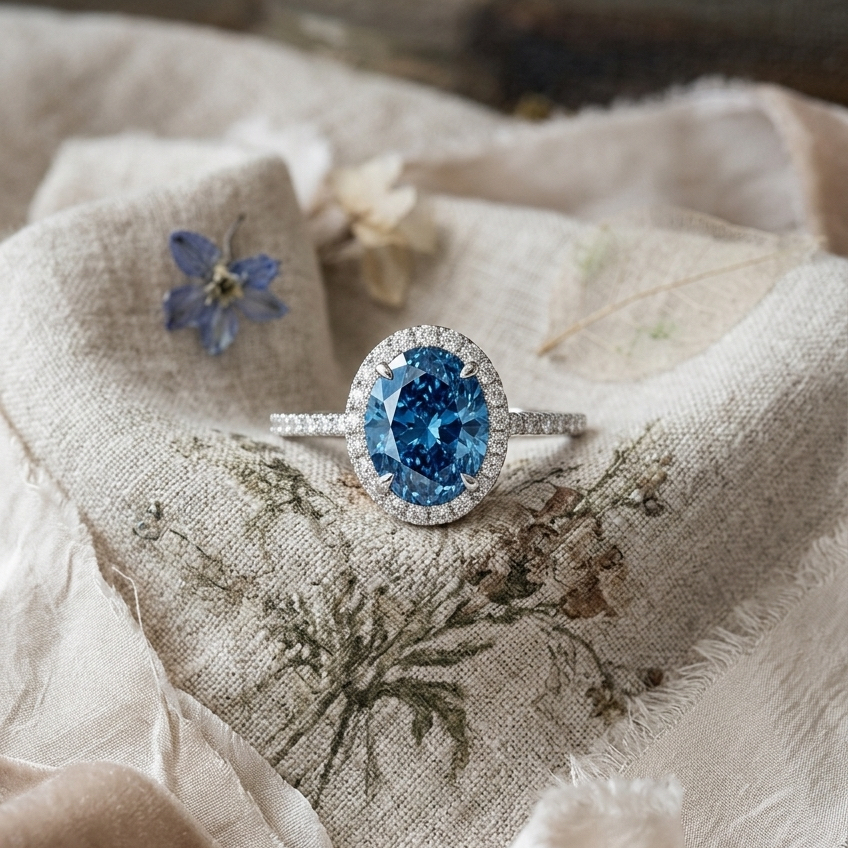
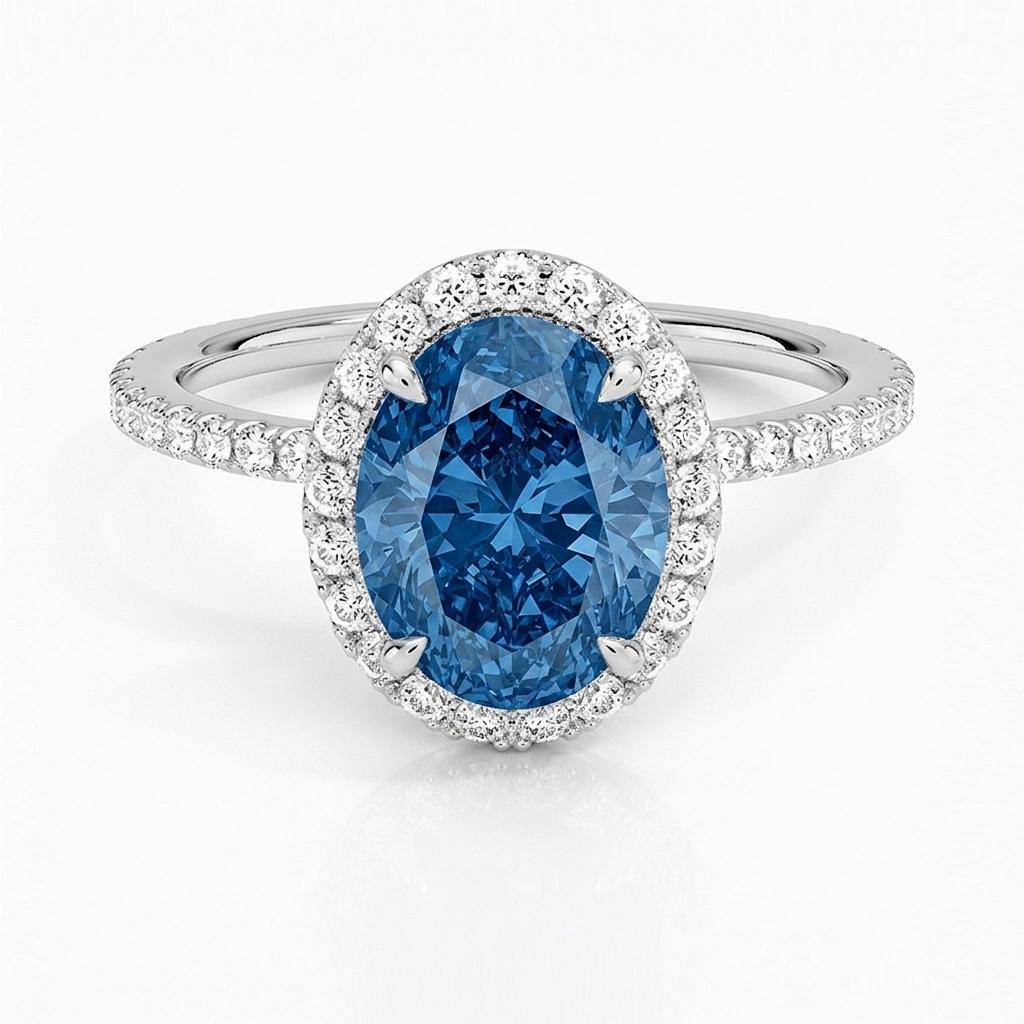
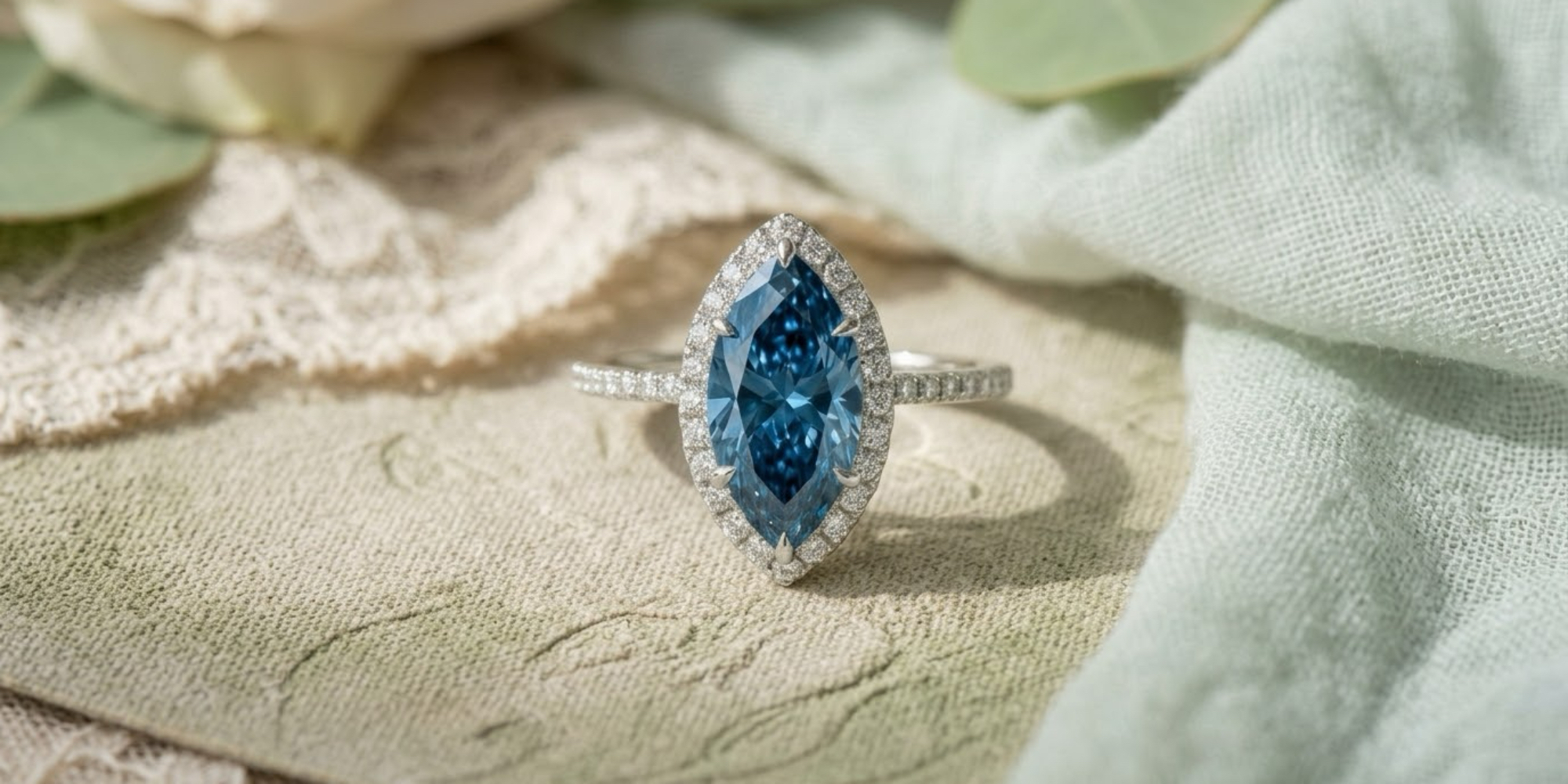
This philosophy is behind our newest blue diamond design: a blue lab-grown marquise diamond set in a white-gold halo.
The white gold creates a clean, luminous frame around the blue center, allowing the color to become the visual focus of the ring.
The halo adds another layer of light around the center stone without taking away from its individuality.
It is a design for a woman who doesn’t necessarily want the expected choice. She may love classic fine jewelry, but she also wants something with a little mystery. Something distinctive. Something that feels like her.
Explore the Blue Lab-Grown Marquise Diamond Halo Ring
Why We Are Excited About Fancy-Color Diamonds Now
The broader jewelry market is also showing strong interest in expressive color and distinctive jewelry.
Recent industry reporting has highlighted continued interest in colored gemstones and more expressive jewelry, while the market is increasingly placing emphasis on individuality, craftsmanship and the story behind a piece.
That makes fancy-color diamonds particularly interesting. They don’t ask you to choose between fine jewelry and individuality.
They allow the diamond’s color to become part of the design language. And for a brand like Her Crown, that matters.
We are not interested in creating jewelry simply because a certain shape or color is fashionable. We are interested in creating pieces that have a point of view.
A Blue Diamond Can Mean Something Different to Every Woman
Perhaps the most beautiful thing about choosing a colored diamond is that you don’t need to explain your choice through tradition.
A blue diamond doesn’t have to mean an engagement. It doesn’t have to represent someone else’s promise.
It can represent your own. A promotion. A new chapter. A personal milestone. A birthday. A decision to choose yourself. Or simply the moment when you see something beautiful and realize that it feels like you.
That is part of the philosophy behind Her Crown and our Her Way Forward series: a woman’s life doesn’t have to follow one predetermined path.
She can choose differently. She can become differently.
She can wear a diamond in a color that feels distinctly hers.
Explore Fancy Color Diamond Rings
Discover Her Way Forward Blogs: The Beauty of Becoming Distinctly Yourself
Explore The Masterwork Design: Blue Teardrop Inspired by Claude Monet’s Impression · Sunrise