Pink has always held a special place in the world of diamonds. From delicate blush tones to intensely saturated vivid pinks, the color can make a diamond feel both feminine and extraordinary. And the pink diamond story is very much alive in the jewelry world today.
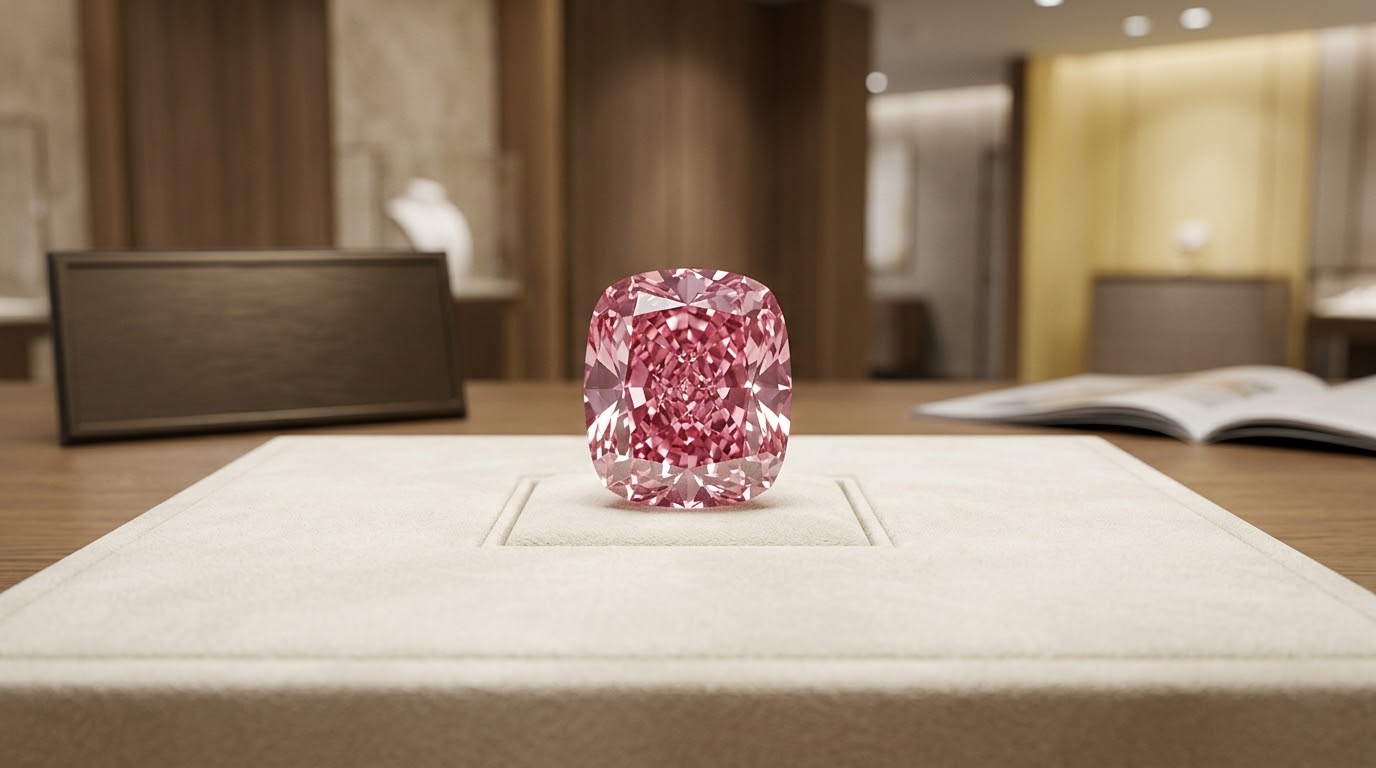
In September 2026, Christie's has announced an exceptional 8.41-carat Fancy Vivid Purple-Pink natural diamond ring as a leading highlight of its upcoming Hong Kong Magnificent Jewels Autumn Auction on November 24. The Type IIa diamond is described by Christie’s as having exceptional saturation, vibrancy and brilliance, with its large size adding to its rarity. (Christie’s)
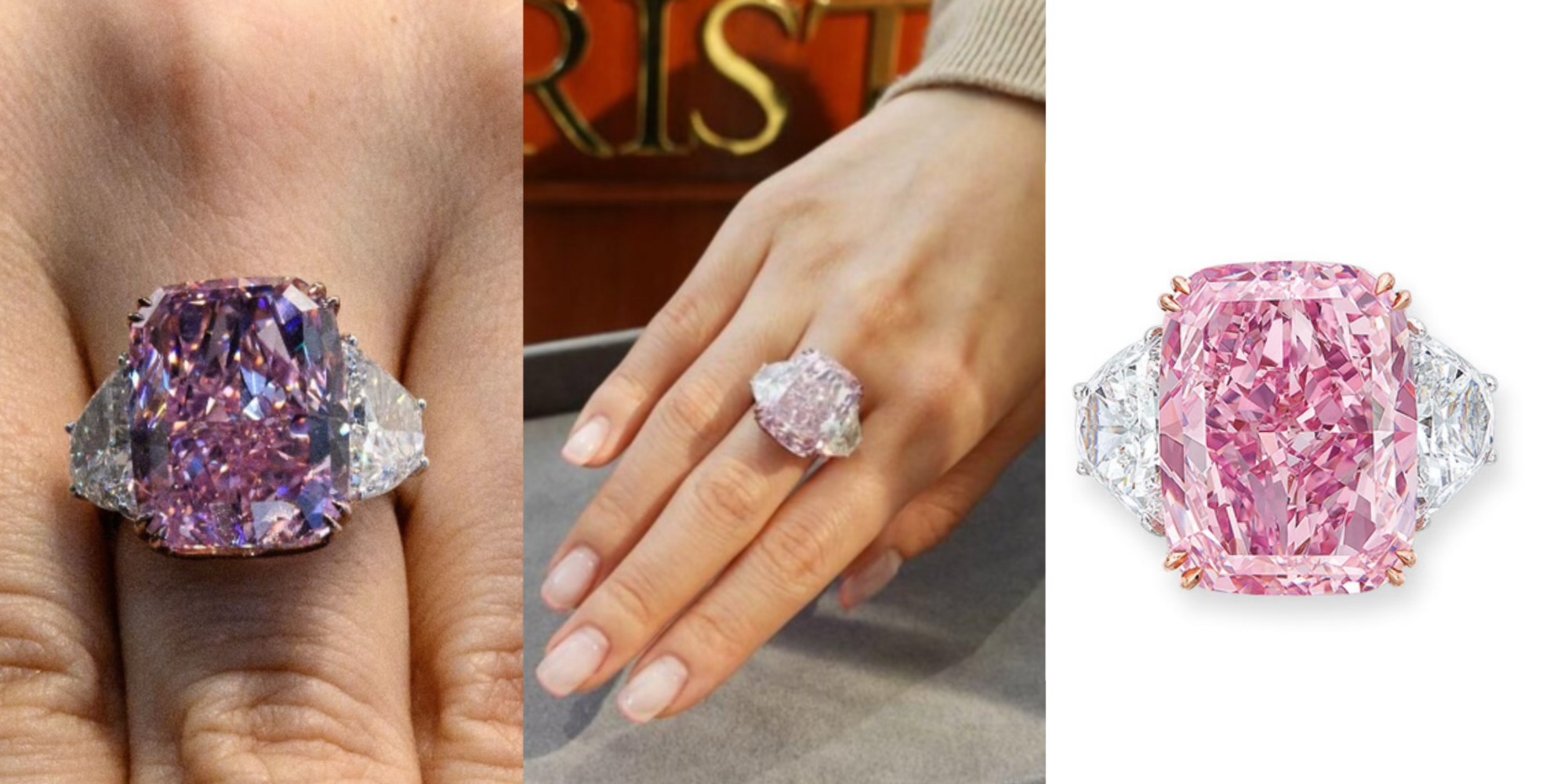
(Image courtesy of Christie’s. The 8.41-carat Fancy Vivid Purple-Pink diamond ring, offered in Christie’s Hong Kong Magnificent Jewels Autumn Auction on November 24, 2026.)
Explore This Design in Lab Grown Pink Diamond
Why Are Pink Diamonds So Rare?
Natural pink diamonds are unusual because their color is not simply caused by a trace element such as boron or nitrogen. According to GIA, pink color in natural diamonds is associated with changes in the diamond’s crystal structure caused by geological stress. The closure of Australia’s Argyle mine in 2020, historically the world’s most important source of pink diamonds, has made exceptional natural pink diamonds even more scarce. (GIA 4Cs)
The market continues to reflect this fascination. The Fancy Color Research Foundation’s Q2 2026 data, reported by JCK, showed pink diamonds as the strongest-performing major fancy-color category during the quarter, rising 0.1%. Fancy Vivid pink diamonds rose 0.5%, while two- and three-carat pink diamonds each increased 0.6%. These figures describe natural fancy-color diamonds and should not be confused with the pricing of laboratory-grown diamonds. (JCK)
What Is a Pink Lab Grown Diamond?
A pink lab grown diamond is a real diamond with essentially the same fundamental physical and optical properties as a natural diamond. The difference is its origin: it is created in a controlled laboratory environment rather than formed naturally deep within the Earth.
Pink laboratory-grown diamonds can be produced through different growth and color processes. GIA notes that irradiation and heating can be used to create pink coloration in laboratory-grown diamonds, and its laboratory-grown diamond reporting can identify growth method and post-growth treatment.
GIA also notes that lab-grown pink diamonds can sometimes have a somewhat different hue from natural pink diamonds and may appear more saturated with less secondary color. (GIA 4Cs)
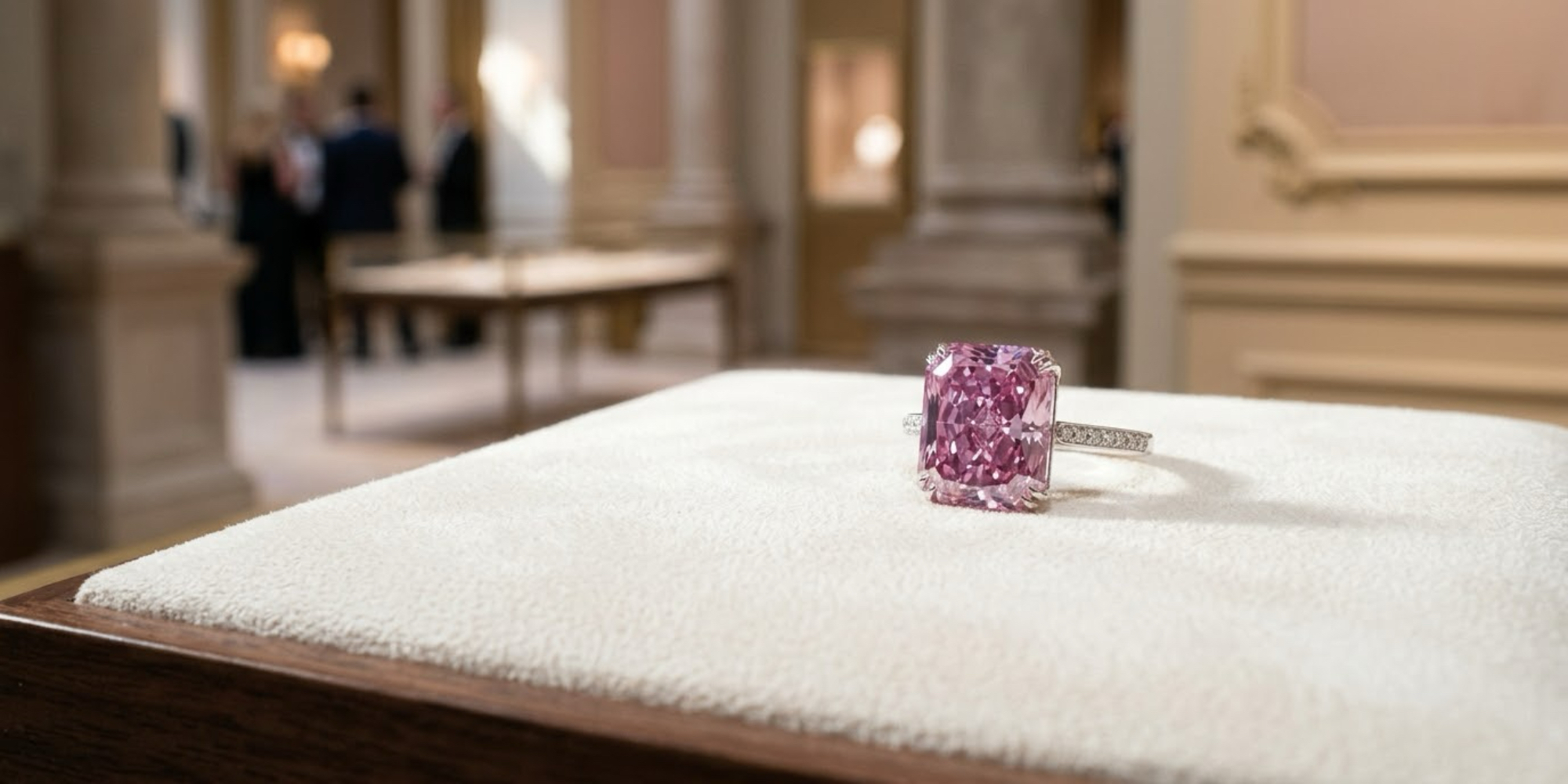
The Cons of a Pink Lab Grown Diamond
Choosing a pink lab grown diamond also means understanding what you are giving up compared with a rare natural pink diamond. The most significant difference is rarity and market positioning.
A natural pink diamond of exceptional color, size and clarity can belong to an extremely scarce category of gemstones, while laboratory-grown diamonds can be produced in greater quantities. Therefore, a lab grown pink diamond should not be purchased with the assumption that it will carry the same scarcity-driven value or collector positioning as an exceptional natural pink diamond.
There can also be differences in color character and origin-related features. Two stones described as pink may not look identical. The exact hue, saturation, tone, growth method, treatment history, cut and proportions can all influence how the diamond appears. This is why choosing only by a color name or certificate description is not enough—particularly when buying a fancy-color diamond online. (GIA 4Cs)
For a woman choosing a pink diamond as fine jewelry rather than as a natural-color-diamond collectible, however, these differences do not automatically make laboratory-grown the wrong choice. They simply define a different proposition: beautiful color, diamond durability and fine-jewelry craftsmanship without the extreme rarity and scarcity premium associated with the finest natural pink diamonds.
Don’t Choose a Pink Diamond by Color Name Alone
A pink diamond can be romantic, sophisticated, playful or powerful depending on its exact color and how that color interacts with the cut. When choosing one, look beyond words such as Fancy Pink or Fancy Vivid Pink. Consider the actual hue, saturation, brilliance, transparency, proportions and how the stone performs under different lighting.
For an online purchase, this becomes even more important. A certificate provides an essential foundation, but it cannot completely replace seeing the actual diamond. A beautifully described stone still needs to look beautiful to your eyes.
Fancy Color Diamond Grading Explained
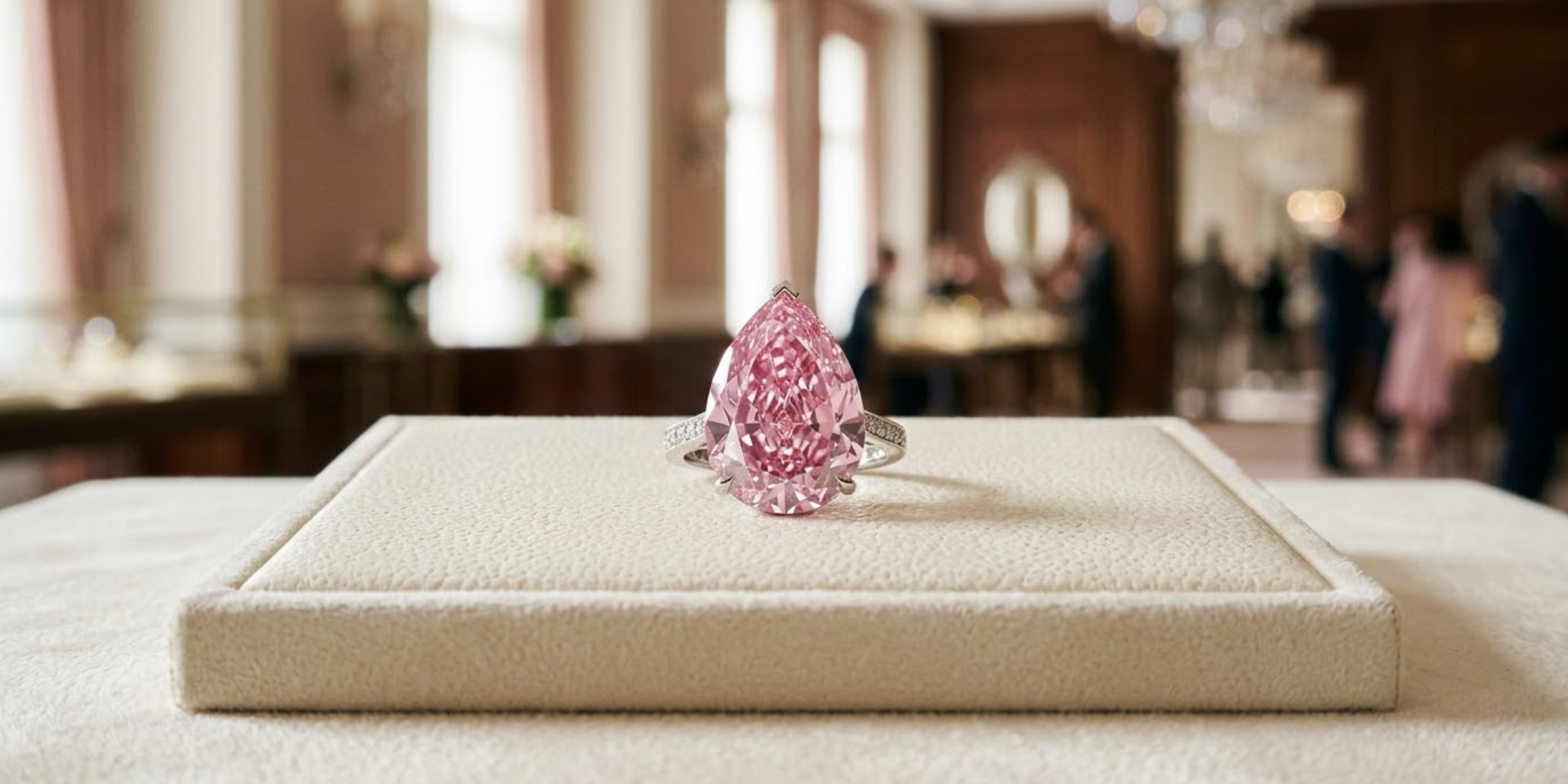
Why We Select the Actual Diamond at Her Crown
At Her Crown, we believe the diamond itself should be part of the design decision. We have recently curated a selection of fancy-color diamonds for our inventory, with particular attention to color, visual presence, cut quality and the overall character of each individual stone.
Rather than treating every diamond with the same certificate description as interchangeable, we personally select stones that meet our standards before presenting them to clients.
For selected fancy-color designs, we can share the actual diamond and its certification information for review before craftsmanship begins. The goal is simple: you should know the stone you are choosing—not just the words used to describe it.
How to Shop Lab-Grown Diamonds Online
Our New Pink Enlonged Cushion Three-Stone Ring
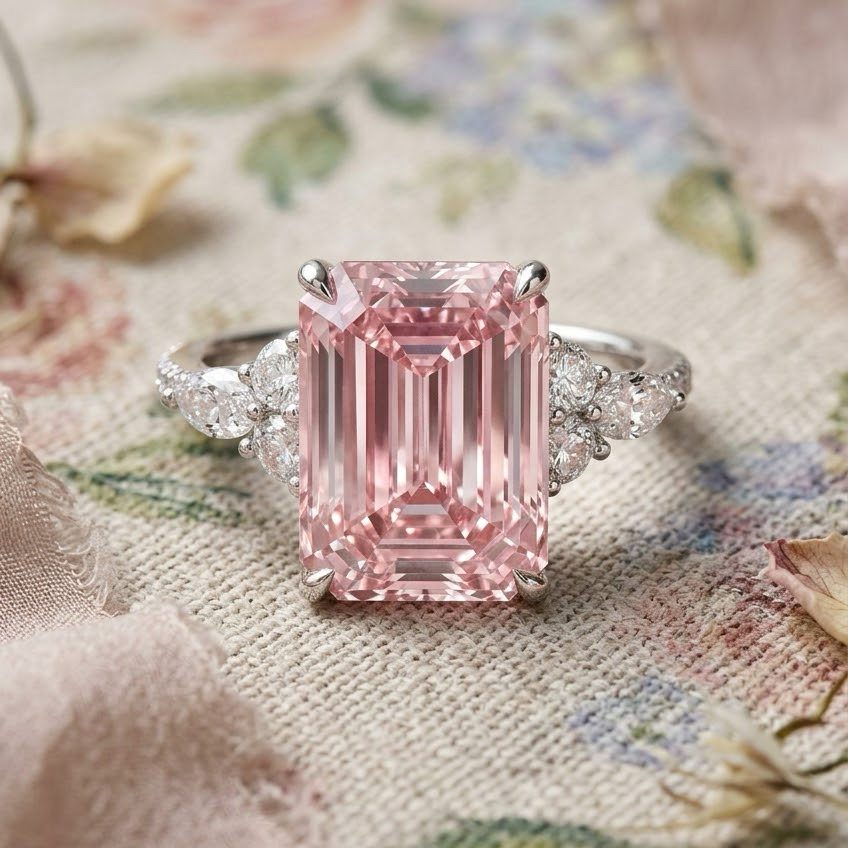
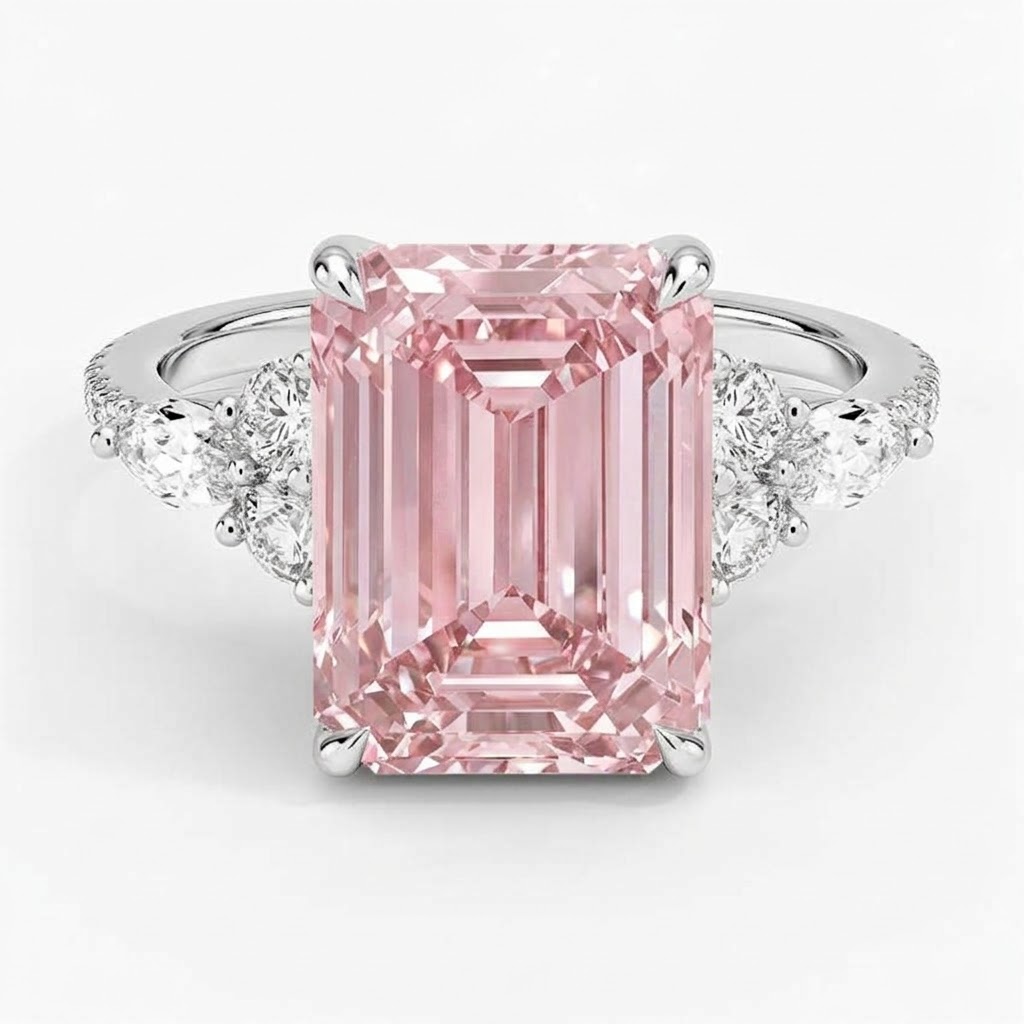
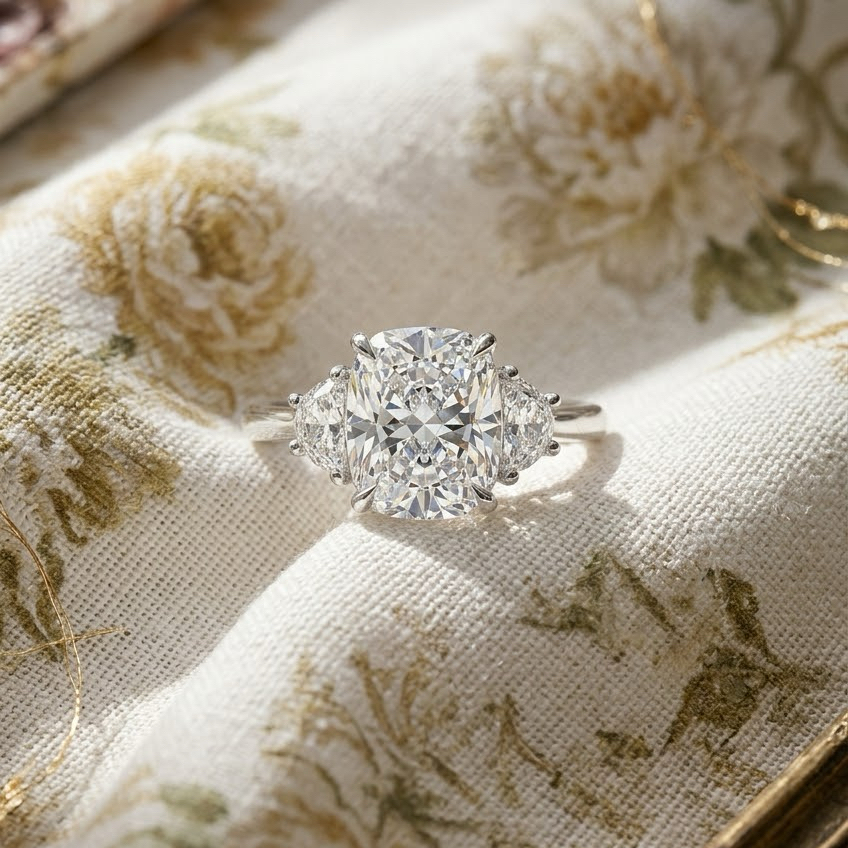
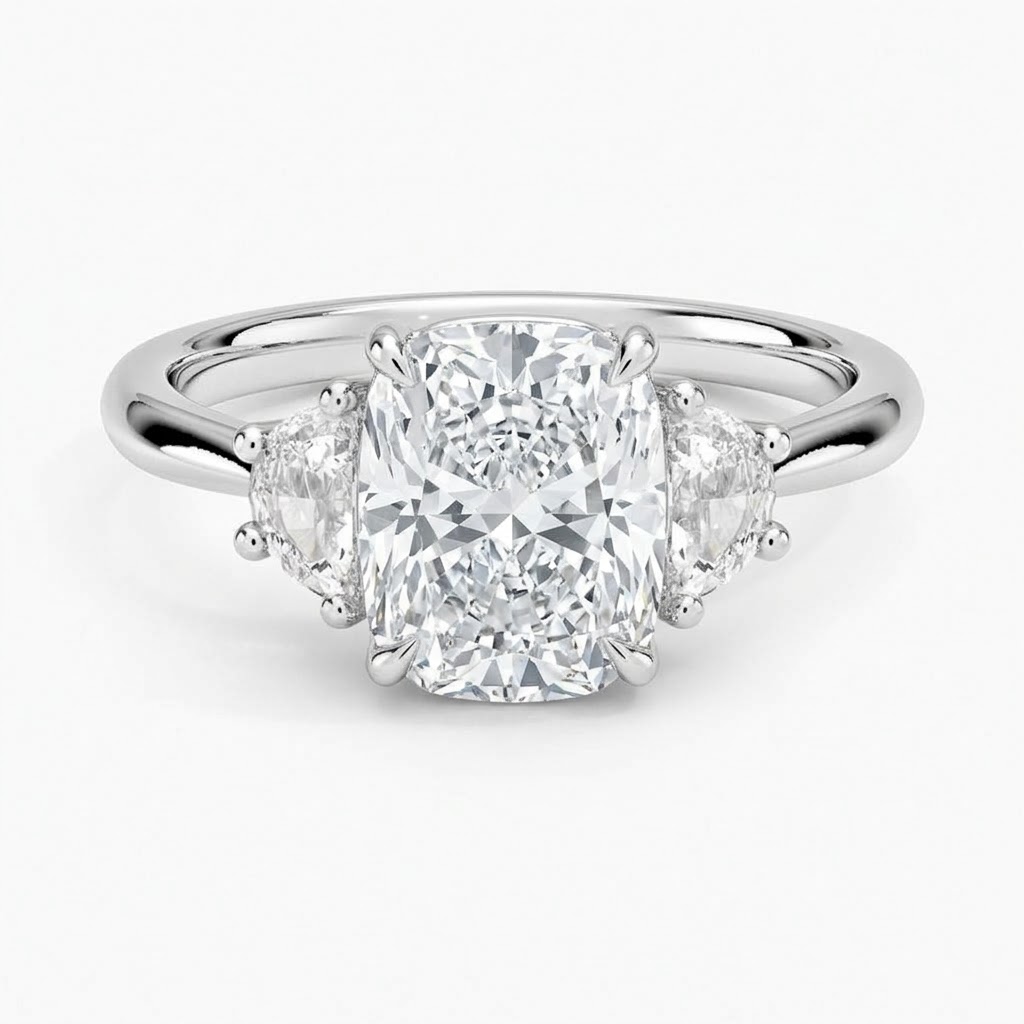
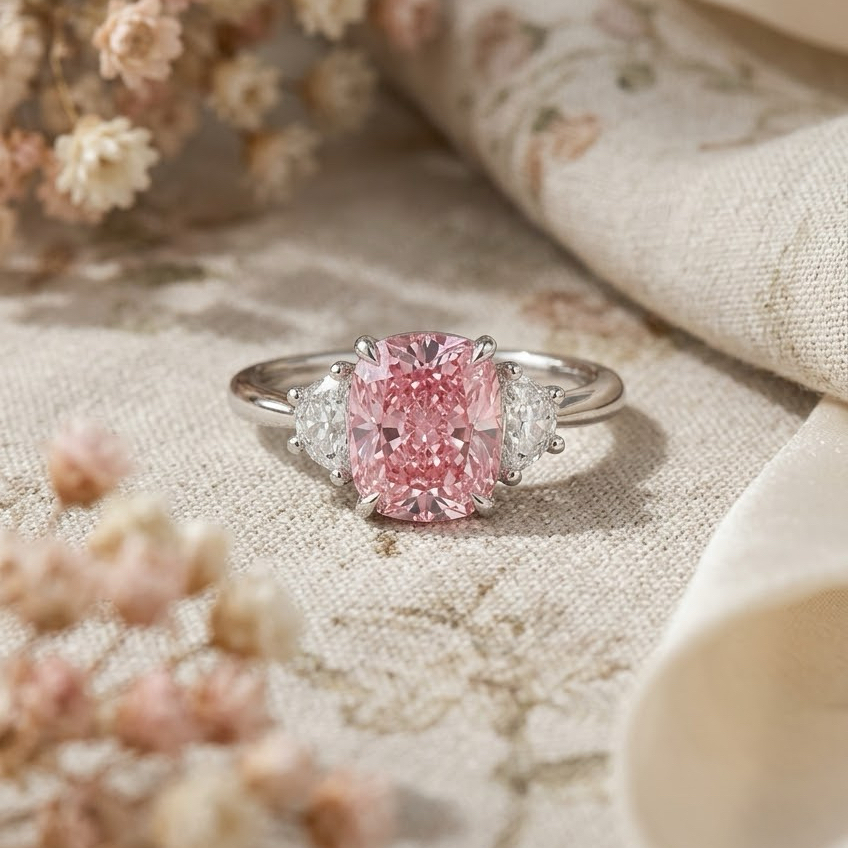
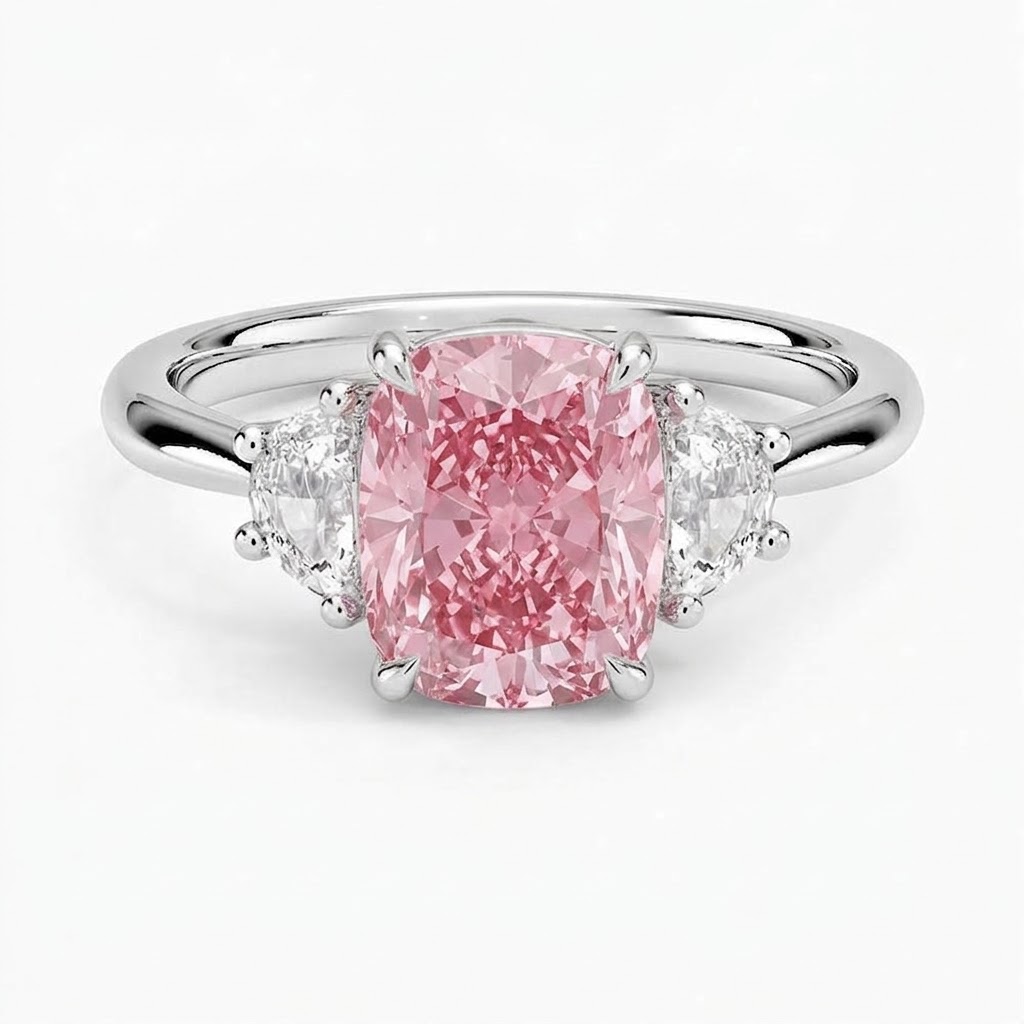
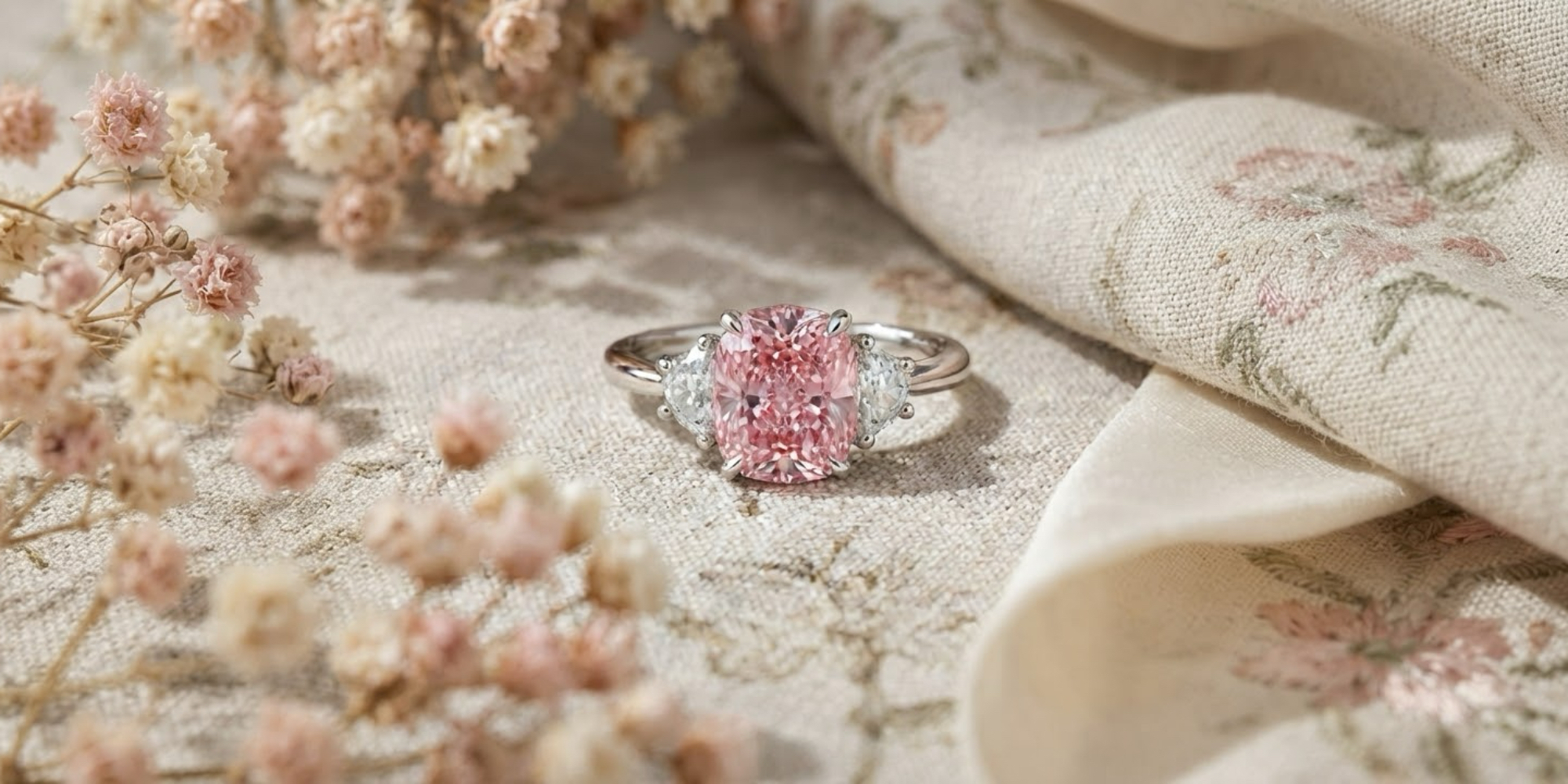
Our newest design brings this philosophy into a distinctly feminine form: a pink enlonged cushion lab grown diamond set in white gold with a three-stone setting.
The enlonged cushion shape gives the pink center diamond an elegant sense of movement, while the three-stone design creates a quiet symbolism of past, present and future. Set in white gold, the cool metal creates a clean contrast against the warmth of the pink diamond, allowing the color to become the visual focus.
It is not designed to imitate a rare natural pink diamond. It is designed for a different woman—and a different reason for wearing pink. It can mark a new chapter, a personal achievement, a birthday, a transformation or simply the decision to choose something beautiful for yourself.
A Pink Diamond Can Mark Her Own Chapter
Perhaps that is what makes colored diamonds so compelling today. A diamond does not have to represent a proposal or a relationship. Pink can represent tenderness without weakness, femininity without limitation, and beauty without needing anyone else’s permission.
For a woman who has spent years building a career, raising a family, leading a business or simply becoming more fully herself, a pink diamond can be a personal marker: this is who I am now, and this is the woman I am becoming.
Natural or Lab Grown: The Choice Is Personal
There is no need to make a pink diamond choice more complicated than it needs to be. If rarity, natural origin and long-term collector significance are central to your priorities, an exceptional natural pink diamond belongs to a very different category.
If your priority is the beauty of pink color, the durability of diamond and a thoughtfully crafted piece of fine jewelry, a pink lab grown diamond offers another way to experience that beauty.
The important question is not simply whether a diamond is natural or laboratory-grown. Look closely at the actual stone, understand its characteristics, consider how it was created and decide what kind of meaning you want your jewelry to carry.
Because sometimes the most beautiful diamond is not the rarest one in the room. It is the one that feels unmistakably like yours.
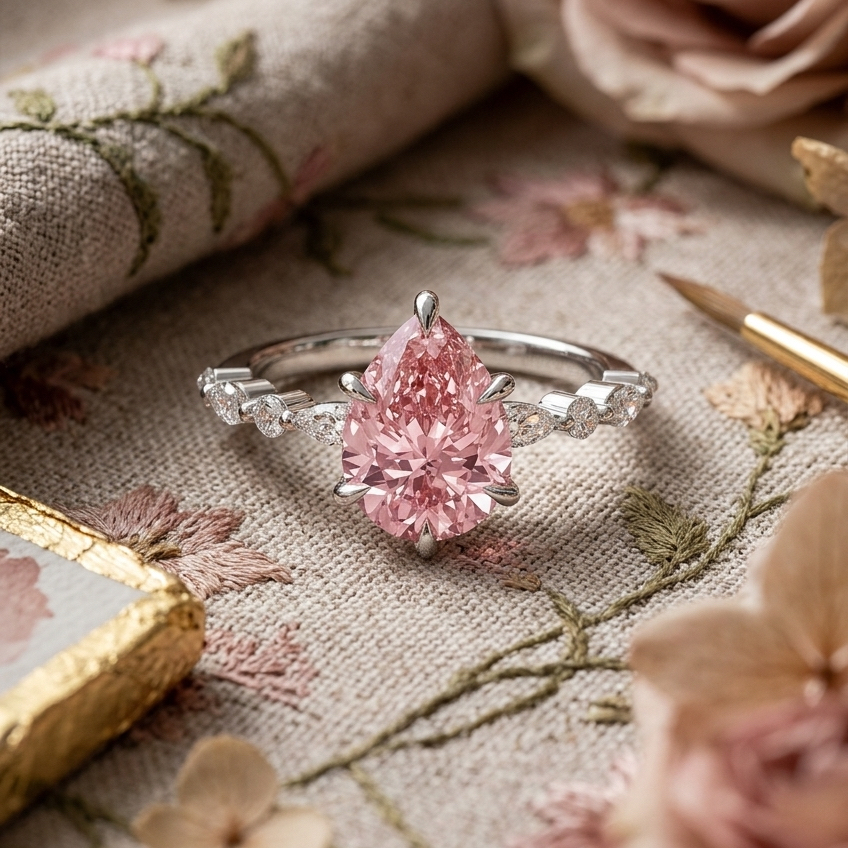
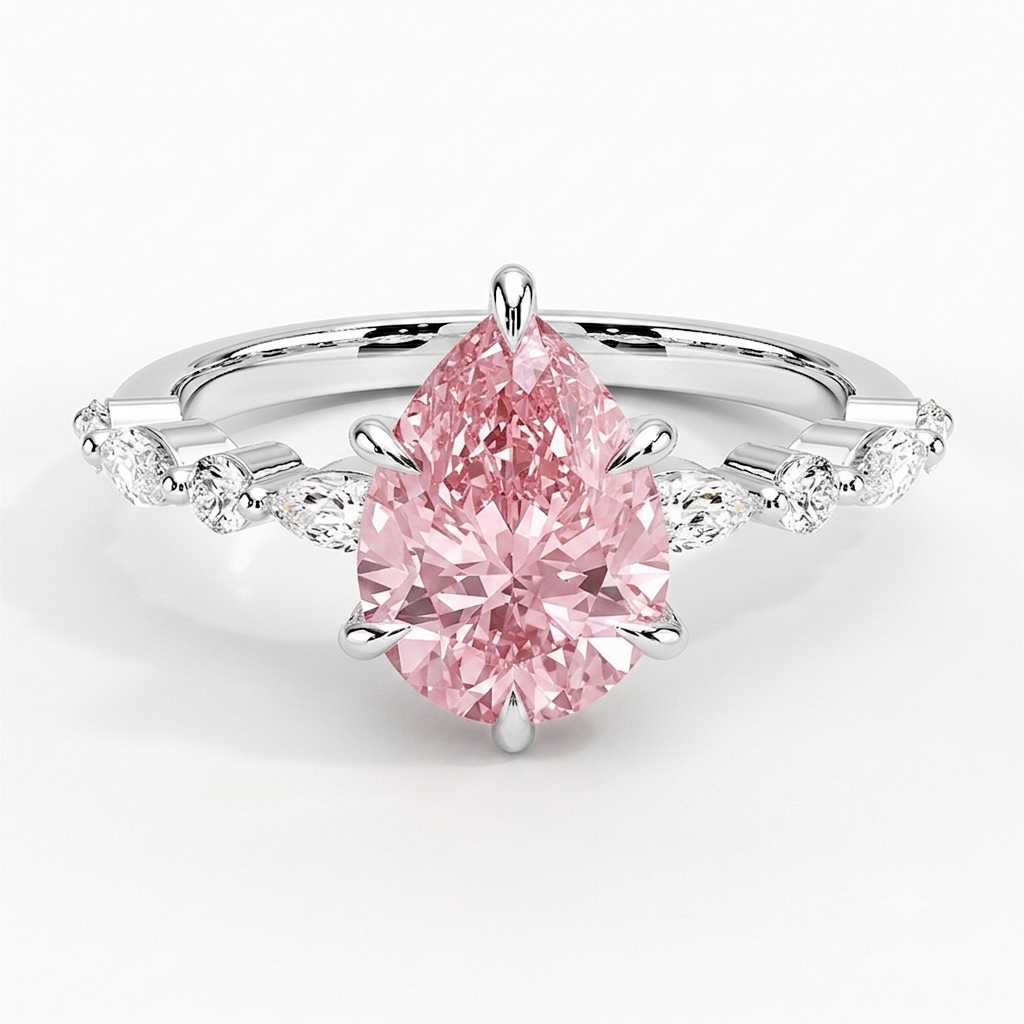
Explore The Masterwork Design: The Pink Teardrop Inspired by Dante Gabriel Rossetti’s Monna Vanna